
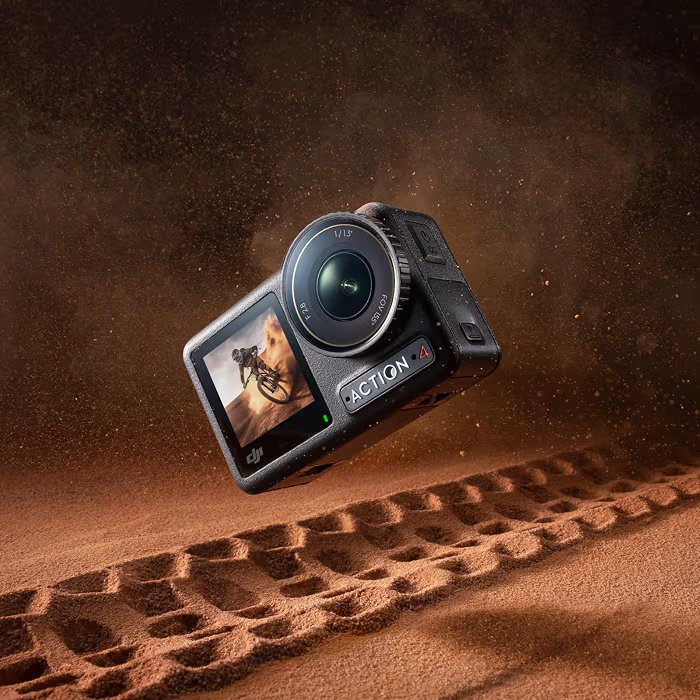
If you’re reading this DJI Osmo Action 4 review, you’re likely trying to figure out whether this now slightly older action camera is still a smart buy, especially with newer models like the Osmo Action 5 Pro on shelves.
The short answer: yes, for a lot of people, it still is. DJI’s Osmo Action 4 launched with a notably larger sensor than its predecessor, and that upgrade continues to pay off in low-light footage even two years later.
This camera is aimed at riders, divers, hikers, and everyday content creators who want reliable stabilization and solid image quality without paying flagship prices. It won’t wow anyone with headline specs in 2026, but it remains a dependable, well-rounded option — and often a genuine bargain now that prices have dropped from launch.

Quick Verdict: DJI Osmo Action 4 Review Summary
Pros
- Larger 1/1.3-inch sensor delivers noticeably better low-light footage
- Long battery life, especially at lower resolutions
- Waterproof to 18 meters without a housing
- Dual full-color touchscreens make framing and vlogging easy
- Rugged build with DJI’s magnetic quick-release mounting system
Cons
- Photo resolution is only 10MP, behind most rivals
- Digital zoom capped at 2x for video, down from 5x on previous model
- No 5.3K or 8K video option
- Accessory ecosystem is smaller than GoPro’s
Overall Rating: 4.0 / 5.0 — An aging but still capable all-rounder, particularly at its current price point.
DJI Osmo Action 4 Specifications
| Specification | DJI Osmo Action 4 Detail |
|---|---|
| Sensor | 1/1.3-inch CMOS |
| Video Resolution | Up to 4K120 |
| Photo Resolution | 10MP |
| Field of View / Aperture | 155° ultra-wide, f/2.8 |
| Stabilization | RockSteady 3.0 + 360° HorizonSteady |
| Battery | Up to ~2.5 hrs (1080p30, lab-rated); ~150 min in -20°C |
| Waterproof Rating | 18m without housing, 60m with case |
| Weight & Size | ~145g | 70.5 x 44.2 x 32.8mm |
| Connectivity | Wi-Fi, Bluetooth, USB-C |
| Color Profile | 10-bit, D-Log M |
DJI Osmo Action 4 Review: Design and Build
Physically, the Osmo Action 4 looks nearly identical to its predecessor, the Osmo Action 3, aside from a new badge and a slightly revised microphone layout. It keeps the same rugged, compact body, front and rear full-color touchscreens, and DJI’s magnetic quick-release mounting system, which remains one of the fastest ways to swap between mounts of any action camera on the market.
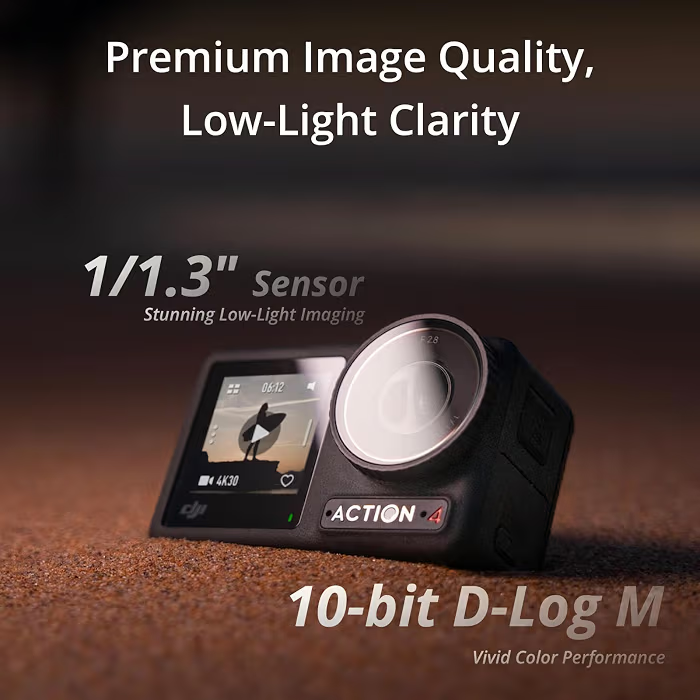
At 145 grams and roughly 70.5 x 44.2 x 32.8mm, it’s light enough to forget you’re wearing it on a helmet mount, and the build quality feels solid rather than plasticky.
Image and Video Quality
This is where the Osmo Action 4 made its biggest leap over the Action 3: a larger 1/1.3-inch sensor, borrowed from the same sensor family used in some of DJI’s drones. That size bump translates into noticeably cleaner footage in dim conditions — think indoor rides, overcast forest trails, or dusk surf sessions — compared to the smaller sensors found in older GoPro and DJI models.
Furthermore, the larger sensor helps the camera maintain cleaner footage in challenging lighting conditions.
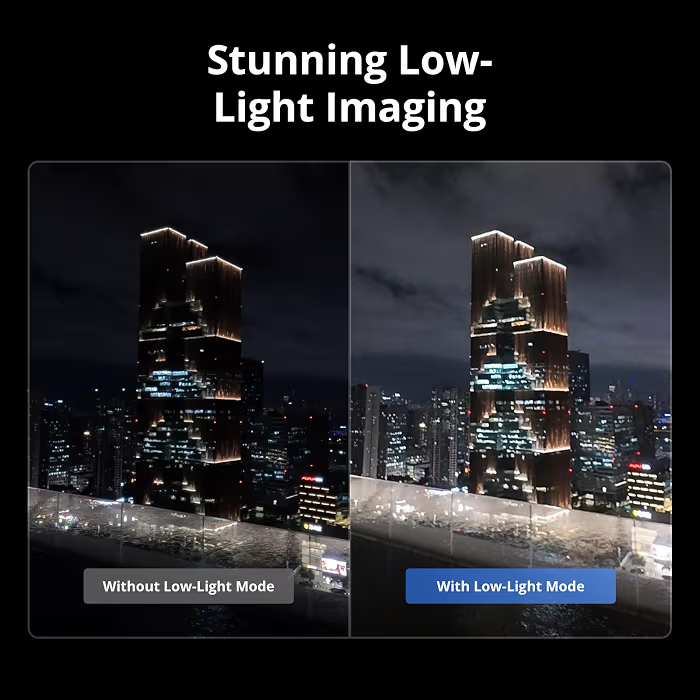
Video tops out at 4K at 120fps with a 155-degree ultra-wide field of view and an f/2.8 aperture, and the camera supports 10-bit color along with DJI’s D-Log M flat color profile for creators who want more room to color grade in post. Photo resolution, on the other hand, is a modest 10MP — a step down from the 12MP of the Action 3 — and digital zoom for video is limited to 2x, down from 5x previously. Neither is likely to be a dealbreaker, but it’s worth knowing going in.
Stabilization Performance
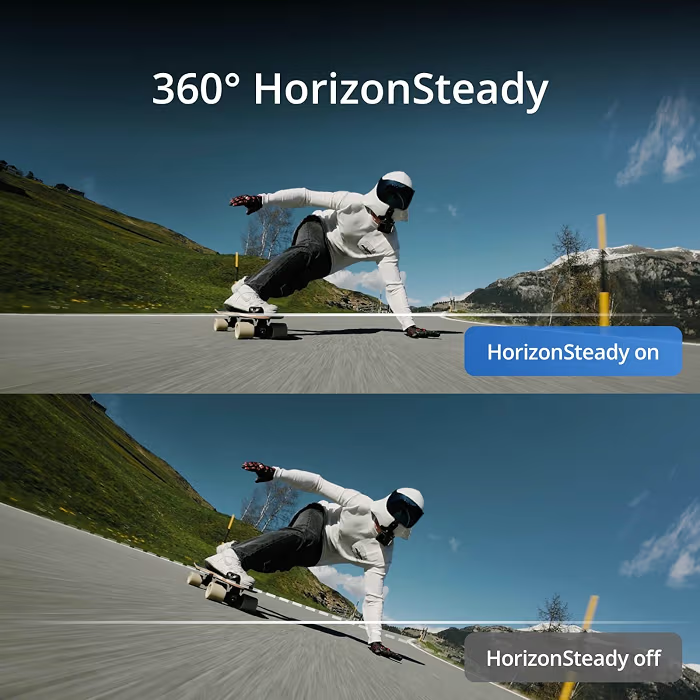
Additionally RockSteady 3.0 combined with 360° HorizonSteady handles handheld shake and tilted horizons impressively well, even during fast, bumpy motion like mountain biking or motocross. Footage stays smooth without the rubbery over-correction some competing systems introduce, which is a big part of why this camera still holds up well against newer releases.
Battery Life & Waterproof Performance
Battery life is consistently one of the strongest points raised in any thorough DJI Osmo Action 4 review, and for good reason. DJI rates it for up to roughly 2.5 hours of continuous 1080p30 recording in lab conditions, and even in freezing temperatures down to -20°C, it can still manage around 150 minutes. Real-world runtime at 4K120 will be shorter, but for a camera this size, it’s genuinely competitive.
Moreover, the Osmo Action 4 is rated waterproof to 18 meters without any additional housing, which covers the vast majority of snorkeling, surfing, and rainy-day use cases without extra gear. A separate waterproof case extends that to 60 meters for more serious diving.

Ease of Use and App Experience
In addition, the dual touchscreens make composing shots straightforward, whether you’re recording handheld or checking framing on a chest mount. DJI’s Mimo app handles transfers, quick edits, and firmware updates smoothly, and live streaming is possible directly over Wi-Fi without extra software.
Key Features & Real-World Performance
What continues to set the Osmo Action 4 apart, even a couple of years after launch, is the combination of a genuinely larger sensor with DJI’s usual strengths in stabilization and battery life. It doesn’t chase flagship resolution numbers, but it consistently delivers usable, good-looking footage across a wide range of conditions — which is arguably more useful day to day than an 8K spec sheet most people won’t fully use.
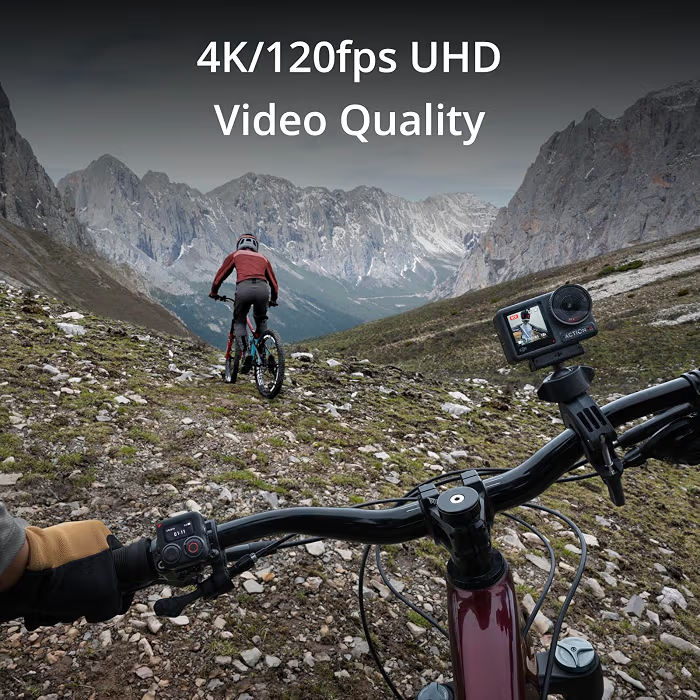
For example riders and outdoor creators often benefit more from reliable stabilization than ultra-high video resolutions.
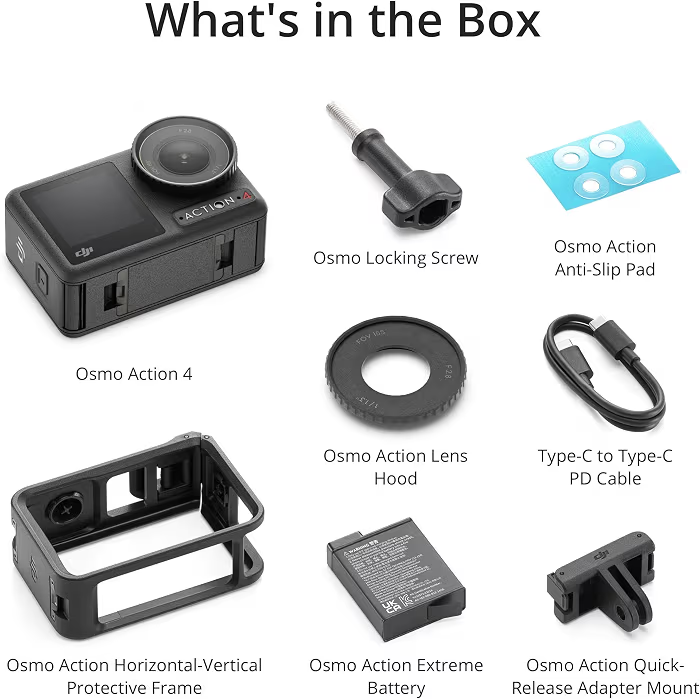
The accessory ecosystem is smaller than GoPro’s sprawling third-party market, but DJI’s own combos — including chest mounts, handlebar mounts, and extension rods — cover most common use cases well.
Related Guide: See our full guide to the Best Action Cameras of 2026
- For instance, the camera’s compact size makes it easy to carry during long trips.
- Meanwhile: the dual screens and Wi-Fi live-streaming support make it a capable vlogging option.
- Additionally: the waterproof design reduces the need for extra protective accessories.
- Sports and adventure use: Strong stabilization handles fast, bumpy footage from biking, motocross, or skateboarding well.
- Everyday content creation: Good all-around image quality, particularly in mixed or low light, makes it a solid everyday shooter.
DJI Osmo Action 4 Review: Who Should Buy It?
- Beginners: Simple menus and an intuitive app make this an easy first action camera.
- Budget-conscious creators: Prices have dropped since launch, making this one of the better value options in DJI’s lineup.
- Low-light shooters: The larger sensor is a genuine advantage for anyone filming indoors, at dusk, or underwater.
- Outdoor and Adventure Users: Waterproofing, freeze resistance, and battery life suit longer days outside.
- Vloggers: Dual screens and decent audio make it a reasonable vlogging pick, if not a class leader.
Direct Comparison: Compare it directly with the DJI Osmo Action 5 Pro Review
Value for Money
At its original launch price, the Osmo Action 4 competed closely with flagship GoPro models. Today, with prices down significantly, it’s a much easier recommendation — particularly for buyers who care more about low-light image quality and battery life than chasing 5.3K or 8K resolution. Anyone who mainly shoots in bright daylight and wants the absolute highest resolution stills might be better served elsewhere, but for most everyday and outdoor use, it holds up well.
DJI Osmo Action 4 vs Competitors
| Camera | Max Video Resolution | Battery Life | Waterproof Depth | Best For |
|---|---|---|---|---|
| DJI Osmo Action 4 | 4K120 | Up to ~2.5 hrs (lab-rated) | 18m without case | Low-light, budget value |
| DJI Osmo Action 5 Pro | 4K120 | Up to 4 hrs (lab-rated) | 20m without case | Long shoots, dual OLED screens |
| GoPro Hero13 Black | 5.3K60 | ~1.5 hrs (4K/5.3K) | 10m without housing | Accessory ecosystem |
| Insta360 Ace Pro 2 | 8K30 | ~1.5–3 hrs | 12m without case | Resolution, low-light editing flexibility |
The Osmo Action 5 Pro is the natural upgrade path if battery life and screen quality matter most, while the GoPro Hero13 Black and Insta360 Ace Pro 2 both offer higher top resolutions at the cost of shorter runtimes or shallower waterproofing without a case. None of these make the Osmo Action 4 obsolete — they simply highlight where a newer or pricier camera might be worth the jump.
Why You Can Trust This Review
This DJI Osmo Action 4 review is based on DJI’s official published specifications, independent expert testing from established camera and outdoor-gear publications, direct comparisons with competing cameras, and real-world user feedback gathered from retailers and forums. We haven’t personally tested this exact unit ourselves, and we’ve aimed to be transparent about that throughout rather than implying otherwise.
Frequently Asked Questions (FAQ)
Is the DJI Osmo Action 4 still worth buying in 2026?
Yes, especially at its current, lower price point — it remains a strong value pick for low-light shooting and battery life.
How long does the DJI Osmo Action 4 battery last?
DJI rates it for up to roughly 2.5 hours of continuous 1080p30 recording, with around 150 minutes possible even in freezing temperatures.
Is the DJI Osmo Action 4 waterproof?
Yes, it’s rated waterproof to 18 meters without a housing, and up to 60 meters with the optional waterproof case.
What does this DJI Osmo Action 4 review say about image quality?
Video quality is strong, particularly in low light thanks to the larger sensor, though photo resolution is a modest 10MP.
How does the DJI Osmo Action 4 compare to the Osmo Action 5 Pro?
The Action 5 Pro offers longer battery life and deeper waterproofing, but the Action 4 remains a more affordable option with similar core stabilization and video quality.
Final Verdict
Wrapping up this DJI Osmo Action 4 review: it’s not the newest or flashiest action camera on the market anymore, but it’s aged well. Strong low-light performance, dependable stabilization, and genuinely long battery life make it a smart pick for riders, divers, and everyday creators who don’t need the highest resolution available. Its main compromises — modest photo resolution and a smaller accessory ecosystem than GoPro’s — are easy to live with given how much the price has come down since launch.
If you’re deciding whether it’s worth buying in 2026, our honest take is that it’s a great value option for anyone prioritizing reliability and low-light quality over flagship specs, though buyers who want longer battery life or deeper waterproofing without a case should also consider the DJI Osmo Action 5 Pro before deciding.
| Category | Rating (out of 5) |
|---|---|
| Build Quality & Design | 4.4 / 5.0 |
| Video Quality & Low-Light | 4.2 / 5.0 |
| Stabilization | 4.5 / 5.0 |
| Battery Life | 4.5 / 5.0 |
| Value for Money | 4.3 / 5.0 |
| Overall Score | 4.0 / 5.0 |
*This article may contain affiliate links. We may earn a commission if you purchase through these links at no additional cost to you.*